
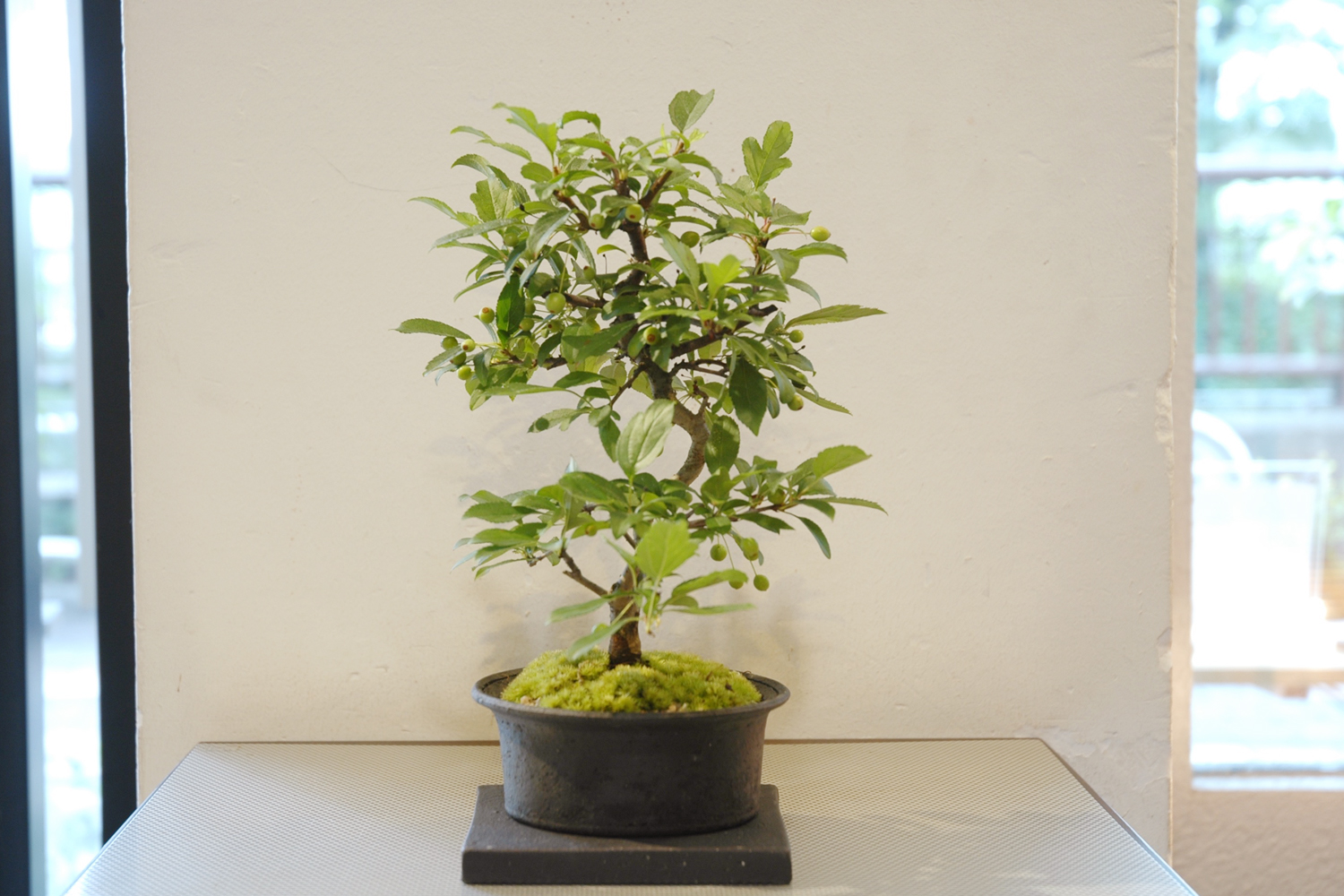
FRUITING BONSAI / SPECIES GUIDE
Siebold’s Crabapple (Zumi / Miyama-kaido) Care
ROSACEAE / MALUS / SMALL DECIDUOUS TREE
From red buds to pure white flowers, then beautiful red fruit in autumn.
A showy fruiting bonsai to enjoy for both flowers and fruit.
For basic care, see “Fruiting Bonsai Care.”
ABOUT ZUMI
About Zumi / Miyama-kaido
From red buds to pure white flowers.
Red fruit in autumn.
Miyama-kaido (zumi) is a small deciduous tree of the apple genus in the rose family. Each tree bears both male and female parts, and because its flowers resemble flowering crabapple and apple blossoms it is also called “mi-kaido.”
In the bonsai world, trees with small yellow fruit have been called “zumi,” and those with slightly larger red fruit “miyama-kaido.”
The flowers open around May–June. Red in bud, they turn pure white when they open. In autumn the fruit ripens to a bright red.
Enjoy the charming red buds before they open.
Once open, the flowers turn pure white.
In autumn the fruit ripens and turns bright red.
PLACEMENT
Placement
Keep it in a sunny, well-ventilated spot.
It grows in shade, but too little sun means less fruit, so keep it in as sunny and well-ventilated a spot as possible.
However, its leaves scorch easily, so in summer, give it morning sun, and move it to bright shade from midday through the afternoon.
Enjoy it indoors, and set it outside while you are out. Outdoor sunlight and fresh air keep the tree healthy.
Give it plenty of sun in spring for more flowers and fruit.
In summer, give it morning sun, and move it to bright shade from midday through the afternoon. This prevents leaf scorch.
WATERING
Do not let it dry out
It loves water,
so do not let it dry out too much.
Miyama-kaido loves water, even growing wild in wetlands.
Running dry can scorch the leaves, so take special care not to let it dry out in summer.
Pots and kokedama dry quickly in the heat. Check the soil or moss often and do not let it dry out too much.
FERTILIZER
Fertilizing
It likes fertilizer,
so feed it well as it grows.
Miyama-kaido likes fertilizer. Feed when the spring buds open, after flowering, and around late September–October.
Feed to match the new spring growth.
Feed after flowering to support the developing fruit.
Feed once the heat has eased. Rest from November.
FLOWERING & POLLINATION
Flowering and Pollination
For better fruit,
grow a related tree alongside.
It flowers around May–June.
Each flower has stamens and pistils, but a single tree may not fruit well on its own.
Growing a related tree such as flowering crabapple (hana-kaido) or crabapple (hime-ringo) alongside for pollination helps it set fruit.
The key is to match the flowering times.
A related tree nearby helps pollination and fruit set.
Placing a related tree that flowers at about the same time nearby can improve fruiting.
PESTS
Watch for aphids
Check new shoots and leaves often.
Aphids and other pests may appear. Check the leaves and branches often, especially while new shoots grow.
FRUITING BONSAI CARE
From red buds to white flowers,
then red fruit in autumn.
With care for sunlight and water, and a related tree to help pollination,
enjoy the change from flowers to fruit.